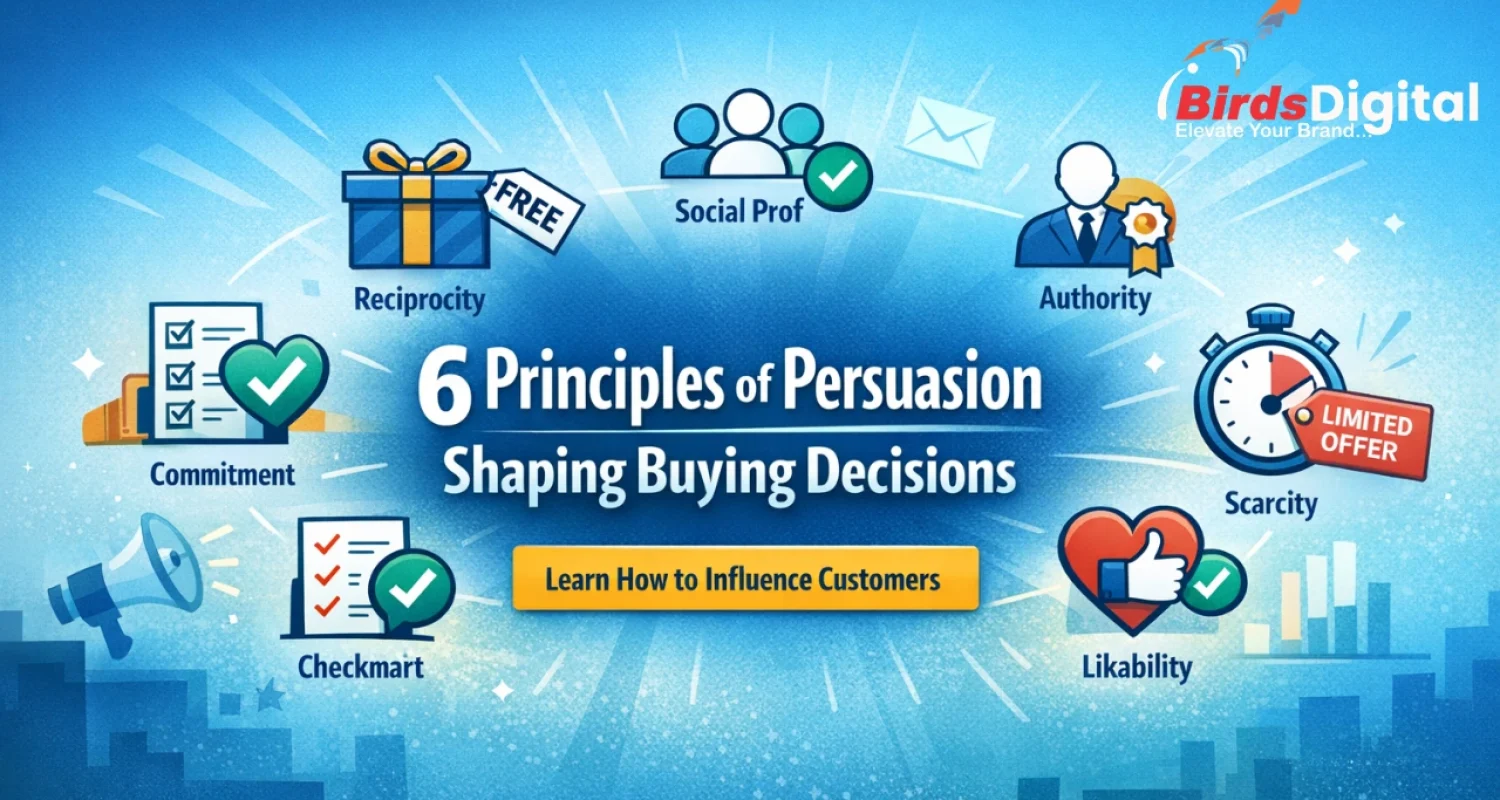
Persuading customers to choose a product or service is not guesswork. It is based on human psychology. The science of persuasion explains why people say yes, why they trust certain brands, and why they act at a particular moment.
Psychology and marketing have always shared a strong connection. Understanding what motivates consumers, what influences their buying decisions, and what persuades them to take action is central to effective marketing strategy.
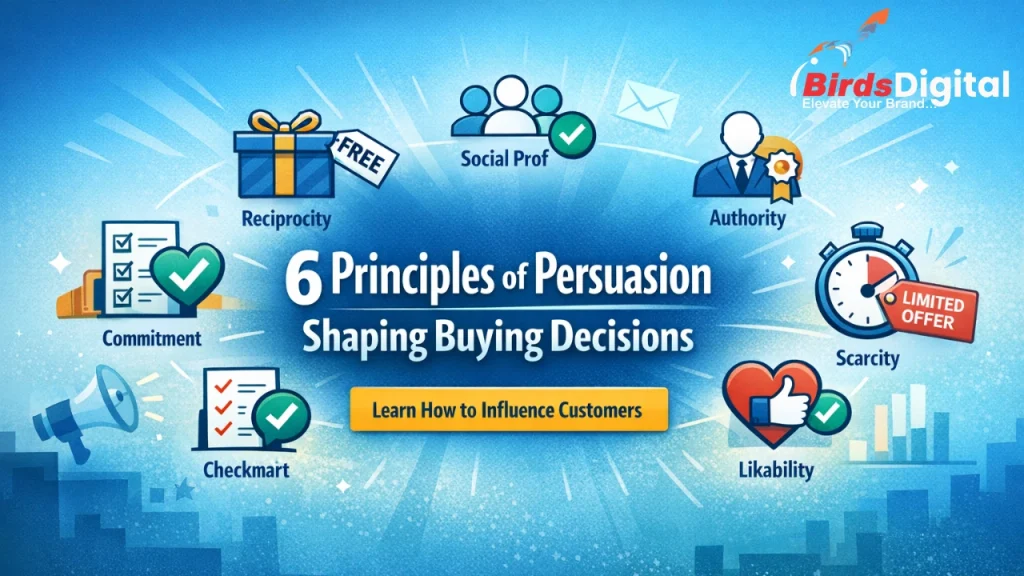
The concept of the six principles of persuasion was developed by Robert Cialdini, Professor Emeritus of Psychology and Marketing at Arizona State University. After years of behavioral research, he identified six universal principles that influence human behavior. These principles are widely used in advertising, branding, digital campaigns, and sales strategies.
Let us explore the six principles of persuasion and understand how they can be applied in modern marketing.
1. Reciprocity
The principle of reciprocity is based on a simple idea: people feel obligated to return a favor. When someone receives something valuable, they naturally feel the need to give something back.
Explore Our Search Engine Optimization (SEO) Services to attract high-intent traffic and build long-term organic growth.
In everyday life, this could be returning a gift or paying for lunch after someone paid for you. In marketing, reciprocity works in a similar way.
Businesses often offer:
- Free samples
- Free trials
- Free consultations
- Downloadable eBooks
- Limited-time access
When a brand provides something useful at no cost, consumers are more likely to respond positively, whether by making a purchase, sharing contact details, or recommending the product.
For example, offering a free downloadable guide through Search Engine Optimization (SEO) Services can encourage users to later invest in a complete SEO package.
However, reciprocity works best when:
- The value offered is genuine.
- The response request is reasonable.
- The exchange happens within a short time.
2. Commitment and Consistency
People prefer to behave consistently with their previous commitments. Once someone commits publicly or actively to something, they are more likely to follow through.
This principle is based on maintaining a consistent self-image. If a person takes a small step, they are more likely to take a bigger related step later.
For example:
- Signing up for a newsletter increases the chance of future purchases.
- Downloading a free tool increases interest in premium features.
- Registering for a webinar increases likelihood of buying the service discussed.
Marketers use this principle by encouraging small commitments first. A simple action like subscribing to updates or filling out a short form builds psychological commitment.
A practical example is offering a free website audit under: Website Development Services. Once a business owner engages with the audit, they are more likely to move forward with a full website redesign.
Commitment creates momentum. Consistency sustains it.
3. Social Proof
Social proof, also known as herd behavior, suggests that people tend to follow the actions of others. When individuals are unsure about a decision, they look at what others are doing.
If one restaurant is full and another is empty, most people choose the busy one. The same applies in online environments.
Digital marketing uses social proof through:
- Customer reviews
- Testimonials
- Ratings
- Case studies
- User-generated content
Statements such as “9 out of 10 customers recommend this” influence buying behavior because they signal trust and popularity.
E-commerce platforms prominently display product ratings and verified reviews. Potential buyers feel more confident when they see positive feedback from other consumers.
Businesses that invest in Social Media Marketing Services often showcase engagement metrics, client success stories, and campaign results to build credibility.
Social proof reduces uncertainty and strengthens trust in the brand.
4. Likability
People are more easily influenced by individuals and brands they like. Likability is influenced by familiarity, similarity, compliments, and positive associations.
Research shows that consumers prefer brands that:
- Reflect their values
- Communicate in a relatable tone
- Maintain visual consistency
- Show authenticity
Brand ambassadors, relatable storytelling, and approachable communication increase likability. Companies often align their brand image with their target audience’s lifestyle.
For example, technology brands may adopt a casual and creative identity to connect with young professionals.
In digital marketing, consistent messaging across Content Marketing Services helps brands build familiarity and trust over time. When audiences repeatedly encounter helpful, informative content, they develop a positive perception of the brand.
Likability strengthens emotional connection, which supports long-term customer loyalty.
5. Authority
People trust experts and authority figures. When someone with knowledge or credentials supports a product, it increases credibility.
Authority can be established through:
- Industry certifications
- Professional experience
- Expert endorsements
- Research-backed data
- Awards and recognitions
Advertising frequently features doctors, engineers, or specialists recommending products. The reason is simple: expertise builds trust.
There is often debate between celebrity endorsements and professional endorsements. Celebrities bring reach and recognition, while experts bring credibility and domain knowledge. The most effective campaigns combine both influence and expertise.
For businesses, publishing data-driven insights and expert-led strategies within Performance Marketing Services strengthens authority in the market.
Authority reduces skepticism and encourages informed decision-making.
6. Scarcity
The scarcity principle states that people assign more value to things that appear limited. When availability is restricted, perceived value increases.
Scarcity can be created through:
- Limited-time offers
- Limited stock notifications
- Exclusive memberships
- Early access programs
- Seasonal discounts
Consumers are more likely to act quickly when they believe an opportunity may disappear. Ticketing platforms frequently display messages like “Only 2 seats left” to prompt faster decisions.
In digital campaigns, limited-time discounts on SEO or advertising packages create urgency without misleading customers.
However, scarcity must be genuine. False scarcity can damage trust and brand reputation.
Applying the Six Principles in Digital Marketing
When used ethically, the six principles of persuasion help businesses communicate more effectively with their audience.
- Reciprocity builds goodwill.
- Commitment increases engagement.
- Social proof strengthens trust.
- Likability creates emotional connection.
- Authority builds credibility.
- Scarcity drives timely action.
For a digital marketing agency like iBirds Digital, integrating these principles into campaign strategy ensures that marketing efforts are grounded in consumer psychology rather than assumptions.
The key is balance. Persuasion should inform and guide decisions, not manipulate emotions or mislead customers. Long-term brand growth depends on trust and transparency.
FAQs
1. What are the six principles of persuasion and who developed them?
The six principles of persuasion were developed by Robert Cialdini. They are Reciprocity, Commitment and Consistency, Social Proof, Authority, Likability, and Scarcity.
2. How is reciprocity used in digital marketing?
Brands offer free resources such as eBooks, consultations, or trial services to encourage customers to respond with purchases or sign-ups.
3. What is an example of commitment and consistency in marketing?
A user signing up for a newsletter is more likely to purchase later because they want to remain consistent with their earlier commitment.
4. How does social proof affect buying decisions?
Reviews, testimonials, and ratings reduce uncertainty and increase trust, influencing consumers to choose a recommended product.
5. Why is authority important in marketing campaigns?
Authority builds credibility. Expert endorsements, certifications, and research-backed data increase trust and influence decisions.
6. How does scarcity create urgency?
Limited-time offers and low-stock alerts encourage consumers to act quickly to avoid missing an opportunity.
7. Are persuasion techniques ethical?
They are ethical when used transparently and responsibly. Misleading tactics can harm brand reputation and long-term trust.
8. Can persuasion principles improve brand loyalty?
Yes. When applied correctly, they strengthen trust, emotional connection, and consistent engagement with customers.