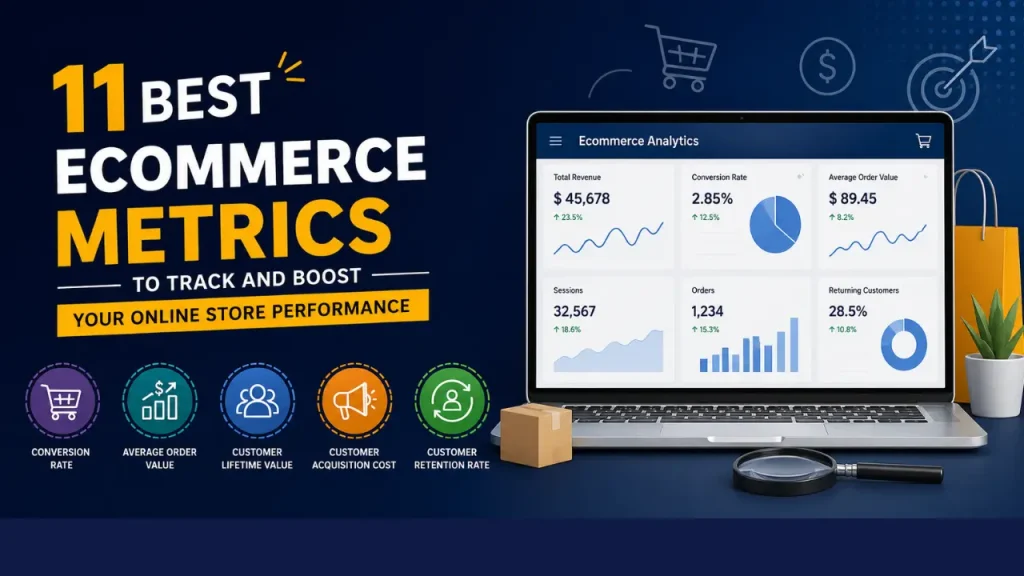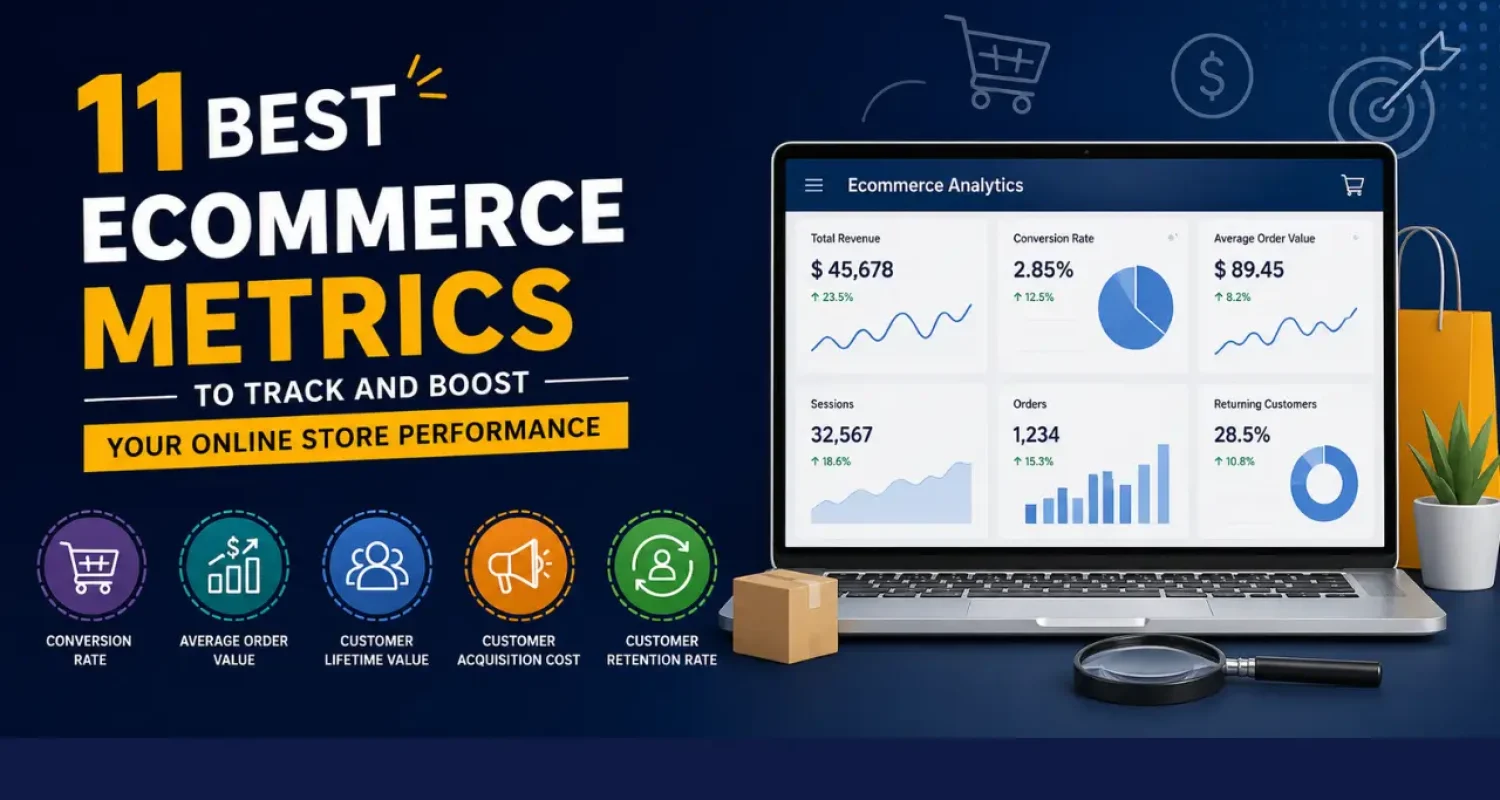
Ecommerce Metrics
Ecommerce business growth depends on how effectively data is tracked and used. Every online store collects customer data such as visits, clicks, purchases, and behavior patterns. However, data alone does not improve performance. The real growth happens when this data is converted into insights and used to improve decisions.
Ecommerce metrics are measurable values that help store owners understand how their business is performing. These metrics provide clear visibility into customer behavior, product performance, marketing success, and overall revenue generation. Without proper tracking, it becomes difficult to identify problems such as low sales, poor conversion rates, or high marketing costs.
In 2026, ecommerce analytics has become more advanced with the use of AI tools, automation systems, and predictive data analysis. Businesses are now focusing on personalized experiences, user intent tracking, and customer journey optimization. This makes it even more important to track the right ecommerce performance metrics.
Social Media Marketing Company for Business
A business that tracks and improves the right metrics can increase sales, improve customer satisfaction, reduce costs, and build long-term growth. On the other hand, ignoring these metrics can lead to poor decisions and missed opportunities.
Difference Between Ecommerce Metrics and KPIs
Ecommerce metrics and KPIs play different roles in business tracking, and understanding the difference is very important.
Metrics are general data points that show what is happening in your business. For example, total visitors, number of orders, page views, and bounce rate are all metrics. These numbers help you understand activity but do not always show success.
KPIs, or Key Performance Indicators, are specific metrics that are directly connected to business goals. For example, conversion rate, revenue growth, customer acquisition cost, and customer lifetime value are KPIs because they directly impact profit and growth.
For example, if your goal is to increase sales, then conversion rate becomes a KPI. If your goal is to reduce marketing cost, then customer acquisition cost becomes a KPI.
The main idea is simple: all KPIs are metrics, but not all metrics are KPIs. Businesses should focus more on KPIs because they directly measure success and help in decision-making.
How to Measure Ecommerce Business Performance
Measuring ecommerce performance requires a structured approach. The first step is setting clear business goals such as increasing revenue, improving conversion rate, or reducing customer acquisition cost. Without clear goals, tracking metrics does not provide meaningful insights.
The next step is selecting the right ecommerce analytics metrics. Tracking too many metrics can create confusion and make analysis difficult. Instead, businesses should focus on the most important metrics that directly impact performance.
Another important factor is consistency in tracking. Ecommerce performance should be monitored regularly. Weekly tracking helps in understanding short-term changes, while monthly analysis helps in identifying long-term trends.
A widely used framework for measuring ecommerce success is the TCR model, which stands for Traffic, Conversion, and Retention. Traffic shows how many people visit the website. Conversion shows how many visitors become customers. Retention shows how many customers return for repeat purchases.
By improving all three areas, businesses can create a strong and scalable ecommerce growth strategy.
Ways to measure ecommerce success
The following are the key components to drive growth in your ecommerce business:
- Setting Key Performance Indicators
- By increasing the conversion rate, you can encourage visitors to make online purchases.
- Attracting your customers to spend more while making a purchase.
- Reduce the advertising and other related costs spent on acquiring customers.
- Choosing the right metrics to track KPIs
- Monitoring performance and success continuously
Choosing the right ecommerce metrics
Though there are thousands of metrics to track, not all of them are necessary to have essential controls in place. Customers are the lifeblood of your business and hence it is very important for you to understand their preferences to uncover right metrics. The focus for any ecommerce manager is the TCR lifecycle which is key to sales – Traffic, Conversion and Retention.
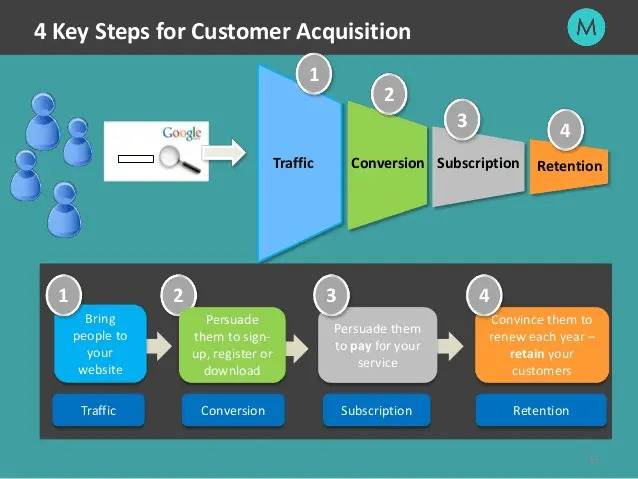
Source: Motarme GMIT Startup Customer Acquisition Seminar
Following are the 11 best ecommerce metrics which we believe every ecommerce store should use for ecom tracking and understand insights from the traffic and gain more.
1. Ecommerce Conversion Rate Optimization Metrics
Conversion rate is one of the most important ecommerce metrics because it directly affects revenue. It measures the percentage of visitors who complete a desired action, such as making a purchase, filling a form, or signing up.
Conversion Rate=Number of OrdersTotal Visitors×100Conversion\ Rate = \frac{Number\ of\ Orders}{Total\ Visitors} \times 100Conversion Rate=Total VisitorsNumber of Orders×100
A high conversion rate means your website is effectively turning visitors into customers. A low conversion rate indicates issues such as poor website design, slow loading speed, lack of trust, or complicated checkout process.
To fully understand conversion rate, it is important to look at both macro and micro conversions. Macro conversions include final purchases, while micro conversions include actions like adding products to cart, clicking on product pages, or signing up for newsletters. Tracking both types helps in identifying where users drop off.
Improving conversion rate requires multiple optimizations. Product pages should include high-quality images, clear descriptions, pricing transparency, and customer reviews. Website speed should be fast because slow websites increase bounce rate. Checkout process should be simple and require minimal steps. Trust signals such as secure payment icons, return policies, and testimonials also improve conversion.
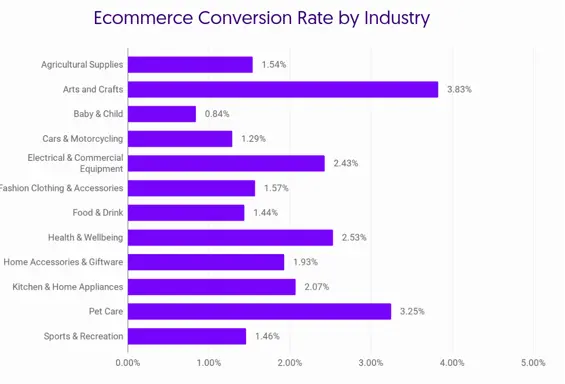
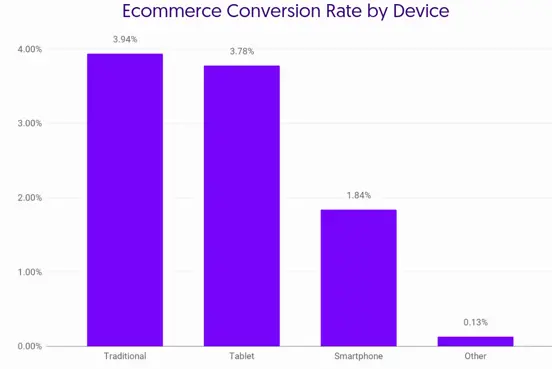
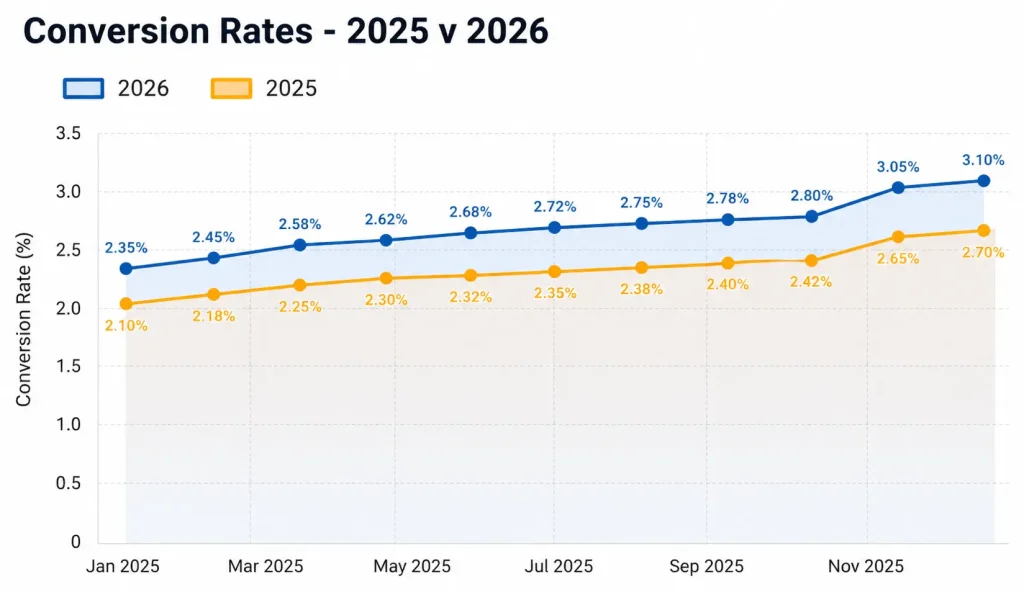
Source: irpcommerce
Increase in average conversion rate by 7% to 1.65% in Mar 2019 compared to Mar 2018
How to improve conversion rate?
2. Average Order Value Optimization for Ecommerce
Average Order Value (AOV) is another critical ecommerce metric that measures how much a customer spends per order. It directly impacts revenue because higher order value means more income from each customer.
AOV=Total Sales RevenueTotal OrdersAOV = \frac{Total\ Sales\ Revenue}{Total\ Orders}AOV=Total OrdersTotal Sales Revenue
AOV is important because increasing it does not require additional traffic. Instead, it focuses on increasing the value of existing customers. This makes it a cost-effective growth strategy.
There are several ways to improve AOV. One common method is product bundling, where related products are sold together at a slightly discounted price. Another method is upselling, where customers are encouraged to buy a higher-priced version of a product. Cross-selling is also effective, where additional related products are suggested during checkout.
Offering free shipping above a certain order value is another proven strategy. For example, if free shipping is available on orders above ₹999, customers are more likely to add extra products to reach that limit.
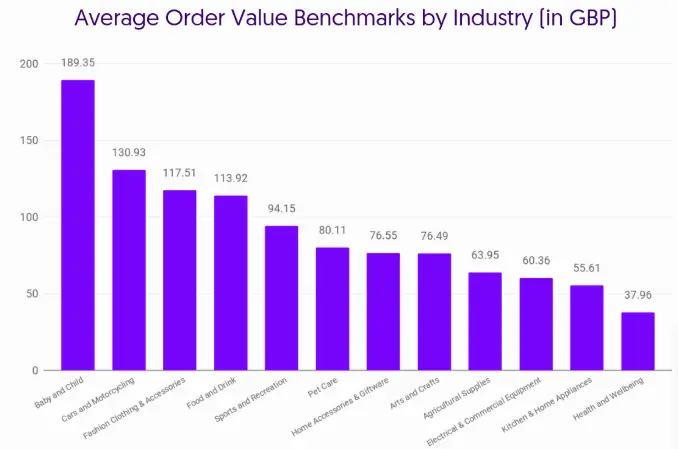
Source: irpcommerce (growcode.com)
Ways to improve Average Order Value
3. Customer Lifetime Value for Ecommerce Business
Customer Lifetime Value (CLV) measures the total revenue a business can expect from a customer during their entire relationship. It is one of the most important metrics for long-term growth.
CLV helps businesses understand how valuable a customer is over time. Instead of focusing only on single purchases, it focuses on repeat purchases and long-term engagement.
A higher CLV means customers are loyal and continue buying from your store. This reduces the need for constant customer acquisition and improves profitability.
To increase CLV, businesses need to focus on customer satisfaction and relationship building. Providing excellent service, fast delivery, easy returns, and personalized offers helps in retaining customers. Loyalty programs and reward points also encourage repeat purchases.
Email marketing plays a big role in increasing CLV by keeping customers engaged with offers, updates, and personalized recommendations.
Ways to calculate customer lifetime value
Ways to increase customer lifetime value
4. Customer Acquisition Cost in Ecommerce Marketing
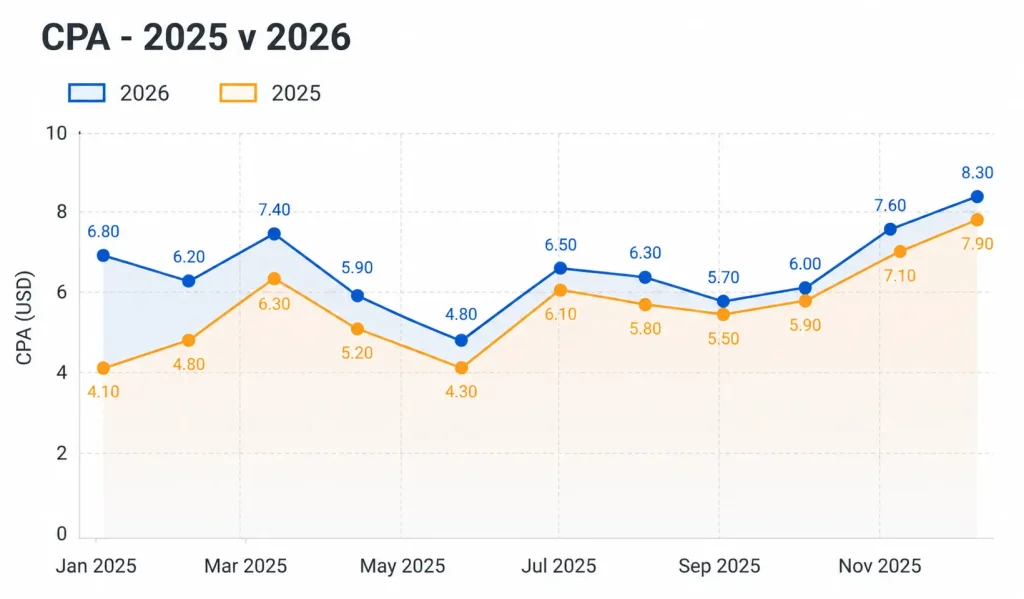
Customer Acquisition Cost (CAC) measures how much money is spent to acquire a new customer. This includes advertising cost, marketing campaigns, and sales efforts.
CAC=Total Marketing SpendTotal New CustomersCAC = \frac{Total\ Marketing\ Spend}{Total\ New\ Customers}CAC=Total New CustomersTotal Marketing Spend
CAC is important because it directly affects profitability. If acquiring customers is too expensive, the business may not generate enough profit.
A healthy ecommerce business ensures that Customer Lifetime Value is higher than Customer Acquisition Cost. This means the revenue generated from a customer should be more than the cost spent to acquire them.
To reduce CAC, businesses should focus on organic marketing strategies such as SEO, content marketing, and social media engagement. Referral programs and word-of-mouth marketing also help in acquiring customers at a lower cost.
Ecommerce SEO services for organic growth
Source: irpcommerce
Increase in average CPA by 0.51% to 7.38% in Mar 2019 compared to Mar 2018
Ways to lower customer acquisition cost
5. Customer Retention Rate and Repeat Purchase Strategy
Customer Retention Rate measures how many customers return to make additional purchases. It is one of the most important indicators of customer satisfaction and loyalty.
Repeat customers are more valuable because they trust the brand and are more likely to spend more. They also require less marketing effort compared to new customers.
Improving retention requires building strong relationships with customers. This includes providing consistent product quality, excellent customer support, and personalized communication.
Email marketing, loyalty programs, and exclusive offers help in keeping customers engaged. Regular follow-ups and feedback collection also improve retention.
Ways to improve customer retention rate
6. Shopping Cart Abandonment Rate Optimization
Cart abandonment rate measures how many users add products to their cart but leave without completing the purchase.
A high cart abandonment rate is a common problem in ecommerce and indicates issues in the buying process.
Common reasons include high shipping cost, complicated checkout, lack of payment options, and unexpected charges. Users may also abandon carts due to lack of trust or distractions.
To reduce cart abandonment, businesses should simplify checkout, offer guest checkout options, provide multiple payment methods, and display clear pricing. Sending reminder emails and using retargeting ads can also bring users back to complete their purchase.
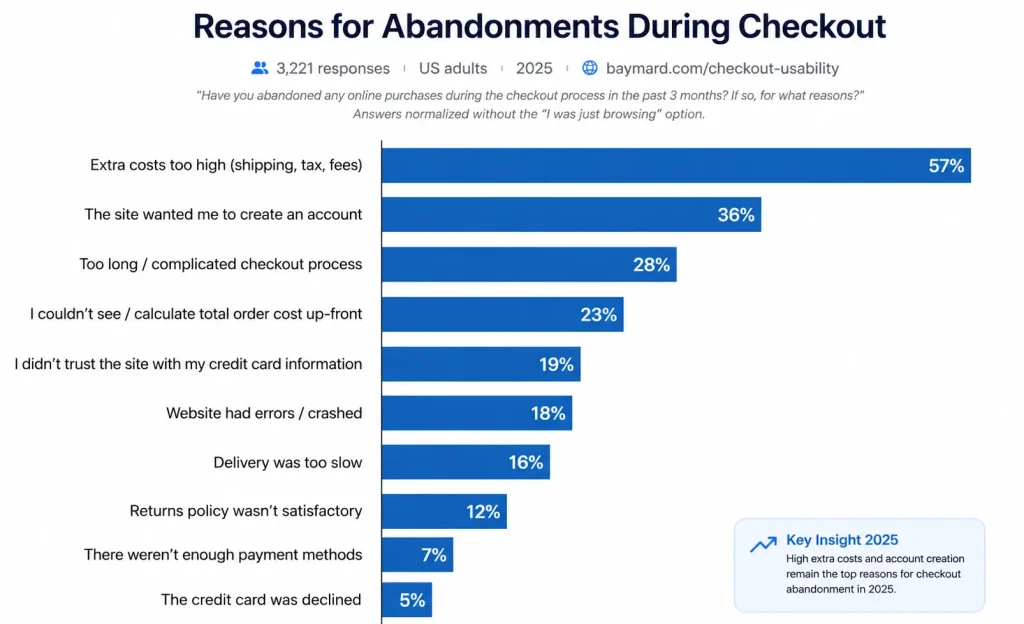
Source: Baymard Institute Cart Abandonment Statistics
Ways to improve shopping cart abandonment rate
7. Revenue by Traffic Source Analytics
Revenue by traffic source helps businesses understand which marketing channels generate the most revenue.
Different channels include organic search, paid ads, social media, and email marketing. Each channel performs differently based on target audience and strategy.
By analyzing this metric, businesses can identify high-performing channels and allocate budget more effectively. For example, if organic search generates more revenue, investing in SEO becomes more beneficial.
This metric also helps in understanding customer intent. Visitors from search engines usually have higher purchase intent compared to social media users.
Digital marketing strategy for ecommerce
Ways to improve revenue by traffic source
8. Net Promoter Score and Customer Satisfaction Metrics
Net Promoter Score (NPS) measures customer satisfaction and loyalty based on their willingness to recommend the brand.
Customers are divided into three groups: promoters, passives, and detractors. Promoters are highly satisfied customers, while detractors are unhappy customers.
NPS helps businesses identify areas of improvement. Feedback from detractors helps in fixing problems, while promoters can be used for referrals and testimonials.
Improving NPS requires focusing on customer experience, product quality, and service efficiency.
Ways to improve net promoter score
9. Social Media Conversion Rate for Online Sales
Social media conversion rate measures how many users from social platforms convert into customers.
Social Conversion Rate=Orders from SocialTotal Social Visitors×100Social\ Conversion\ Rate = \frac{Orders\ from\ Social}{Total\ Social\ Visitors} \times 100Social Conversion Rate=Total Social VisitorsOrders from Social×100
Social media platforms are now major sales channels. Features like Instagram Shop and Facebook Marketplace allow direct purchasing.
Improving social conversion requires engaging content, strong visuals, influencer marketing, and targeted ads.
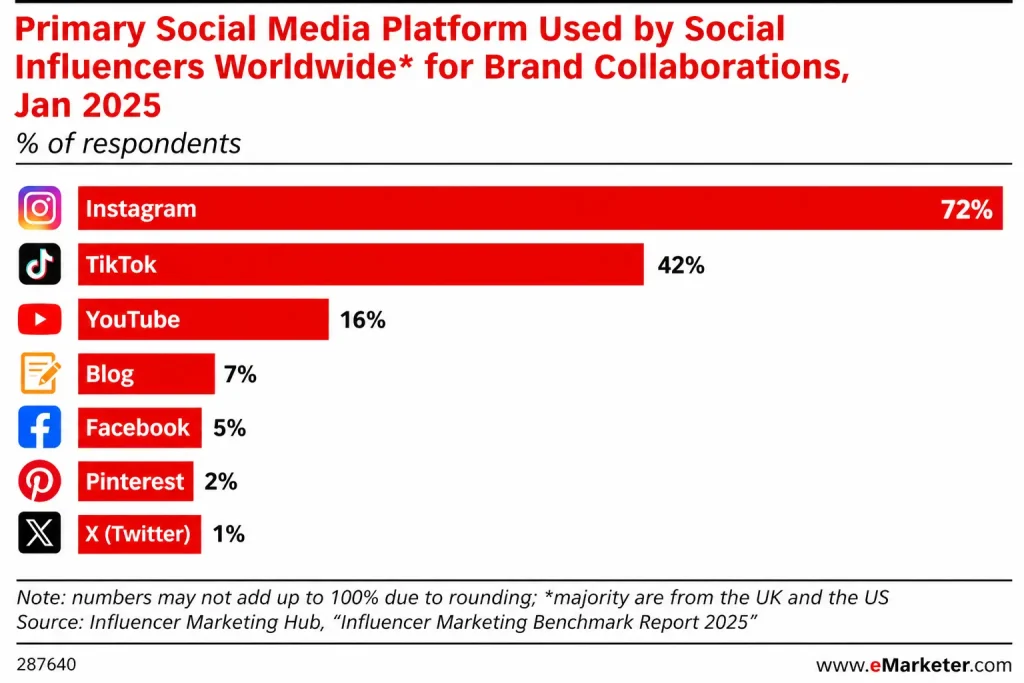
Source: eMarketer
Ways to improve social media conversion rate
10. Email Marketing Conversion Rate Optimization
Email conversion rate measures how effective email campaigns are in generating sales.
Email Conversion Rate=Sales from EmailTotal Emails Sent×100Email\ Conversion\ Rate = \frac{Sales\ from\ Email}{Total\ Emails\ Sent} \times 100Email Conversion Rate=Total Emails SentSales from Email×100
Email marketing provides direct communication with customers and offers high return on investment.
Improving email conversion requires segmentation, personalization, and automation. Sending relevant offers based on customer behavior increases effectiveness.
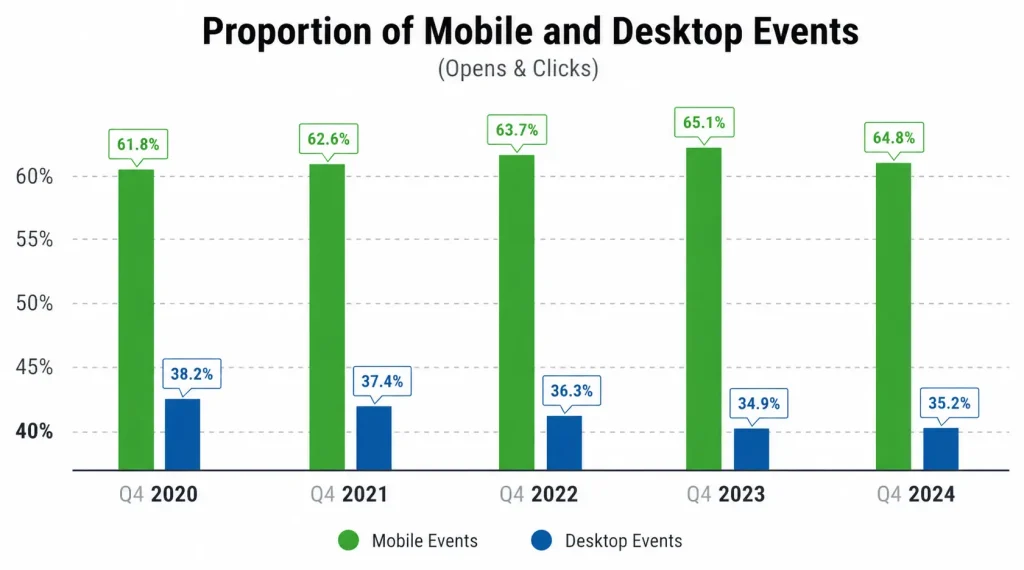
Source: Yes Marketing
Ways to improve email conversion rate
11. Website Engagement Metrics for Ecommerce SEO
Website engagement metrics show how users interact with your website. These include bounce rate, session duration, pages per session, and returning visitors.
High engagement indicates that users find the website useful and relevant. Low engagement suggests issues in design, content, or user experience.
Improving engagement requires fast loading speed, mobile-friendly design, clear navigation, and high-quality content.
Ways to improve website engagement
Conclusion
Ecommerce growth depends on tracking and improving the right metrics. Businesses that focus on data-driven strategies can increase sales, improve customer experience, and achieve long-term success.
By regularly analyzing conversion rate, AOV, CLV, CAC, and other important metrics, ecommerce stores can identify opportunities and improve performance consistently.
FAQs
1. Which ecommerce metric impacts sales the most?
Conversion rate has the most direct impact on sales because it shows how many visitors are turning into buyers. Improving conversion rate means you can increase revenue without increasing traffic.
2. How to improve ecommerce performance?
Ecommerce performance can be improved by optimizing conversion rate, increasing average order value, and reducing customer acquisition cost. Regular data analysis and user behavior tracking also help in making better decisions.
3. What is a good conversion rate?
A good conversion rate depends on the industry, product type, and audience. Generally, a conversion rate between 2% to 4% is considered average, while higher-performing stores can achieve 5% or more.
4. How to increase average order value?
Average order value can be increased by using upselling, cross-selling, and product bundling strategies. Offering free shipping on higher order amounts also encourages customers to spend more.
5. Why is customer retention important?
Customer retention is important because repeat customers are more likely to buy again and spend more. It also reduces marketing costs since acquiring new customers is more expensive than retaining existing ones.
6. How to reduce customer acquisition cost?
Customer acquisition cost can be reduced by focusing on organic channels like SEO, content marketing, and social media engagement. Referral programs and word-of-mouth marketing also help in lowering costs.
7. Which tools help in ecommerce analytics?
Tools like Google Analytics 4, Shopify Analytics, Mixpanel, and heatmap tools help track user behavior and performance. These tools provide insights that help improve conversion rate and overall business growth.