Online advertising has evolved rapidly over the past few years, and in 2026 it has become one of the most powerful ways for businesses to reach their target audience. Compared to traditional marketing methods, digital advertising offers better targeting, measurable performance, and cost-effective results. Among all platforms, Facebook continues to dominate as a reliable and scalable advertising channel for businesses of all sizes.
One of the biggest advantages of Facebook advertising is its ability to target users based on highly specific parameters such as location, age, gender, interests, and behavior. This allows businesses to connect directly with the right audience instead of wasting budget on irrelevant users. In addition, advertisers can monitor campaigns in real time and optimize them for better results, making Facebook ads a preferred choice for modern marketers.If you want expert help in running high-converting ad campaigns, our Facebook advertising services for business growth can help you reach the right audience and generate quality leads.
About Facebook
Meta Platforms owns Facebook, which has grown into one of the largest social networking platforms in the world. With billions of active users, it provides businesses with an unmatched opportunity to connect with potential customers globally.
Recent trends show that users are increasingly influenced by social media when making purchasing decisions. Many consumers discover new products through Facebook and rely on recommendations, reviews, and engagement before making a purchase. This makes Facebook a powerful platform not just for visibility, but also for building trust and driving conversions.
Some key insights that highlight Facebook’s impact include:
- A large percentage of users engage with brands before making a purchase
- Social proof plays a major role in influencing buying decisions
- Facebook and Instagram together offer massive reach and engagement opportunities
About Facebook Ads
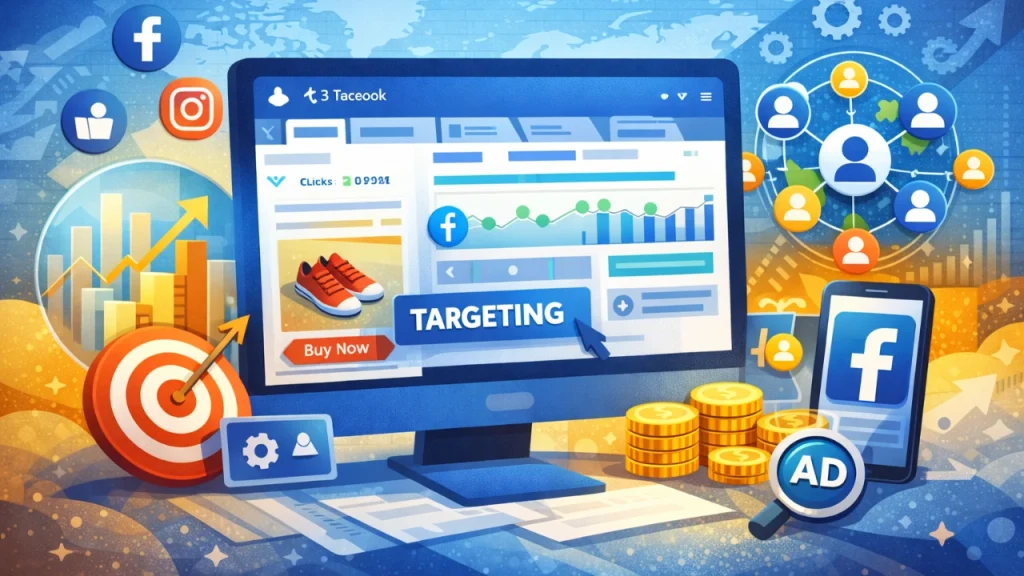
Facebook Ads are paid promotional messages that businesses use to reach a targeted audience. These ads are displayed based on user activity, interests, demographics, and even behavior outside the platform. This level of personalization is what makes Facebook advertising highly effective in today’s competitive market.
Using Facebook Ads Manager, advertisers can easily create campaigns, set budgets, define their audience, and track performance. The platform provides detailed analytics, allowing businesses to understand how their ads are performing and where improvements can be made. This data-driven approach helps in creating high-converting campaigns over time.
Managing ads effectively requires experience and strategy. Our professional Facebook ads management services are designed to optimize campaigns and deliver maximum ROI.
Components of Creating a Facebook Ad
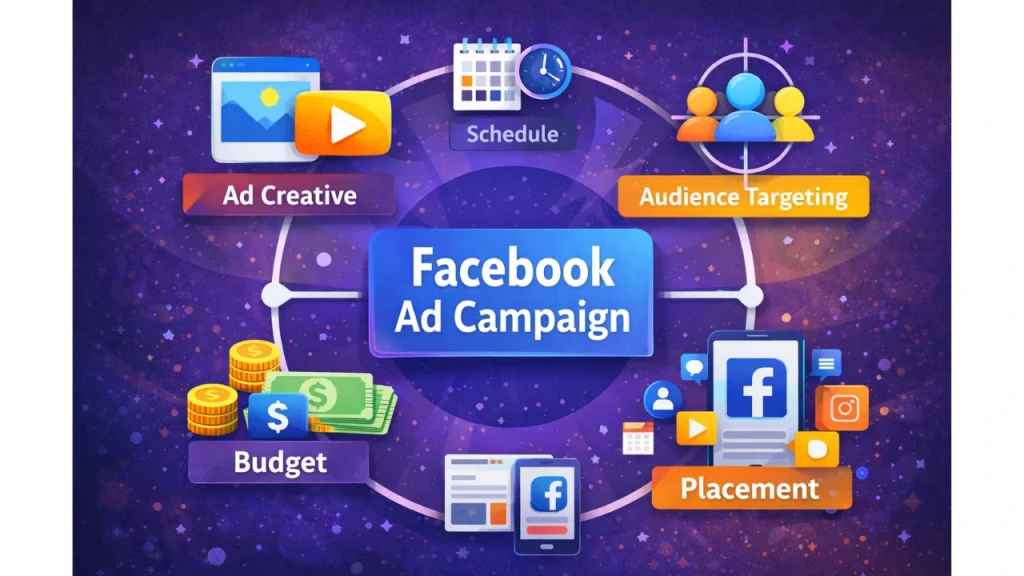
A successful Facebook ad campaign is built on several important components that work together to deliver results. Understanding these elements helps in creating a well-structured and effective campaign.
The key components include:
- Ad Creative: The visual and text elements that capture attention
- Targeting: Selecting the right audience for your campaign
- Placement: Deciding where your ads will appear
- Budget & Bid: Controlling how much you spend and how you compete in auctions
- Schedule: Defining how long your campaign will run
When these components are properly aligned, they significantly improve the chances of achieving better engagement and conversions.
Creating the right combination of targeting, creatives, and budget can be challenging. That’s where our social media advertising services for small businesses help you achieve better performance.
Types of Facebook Ads
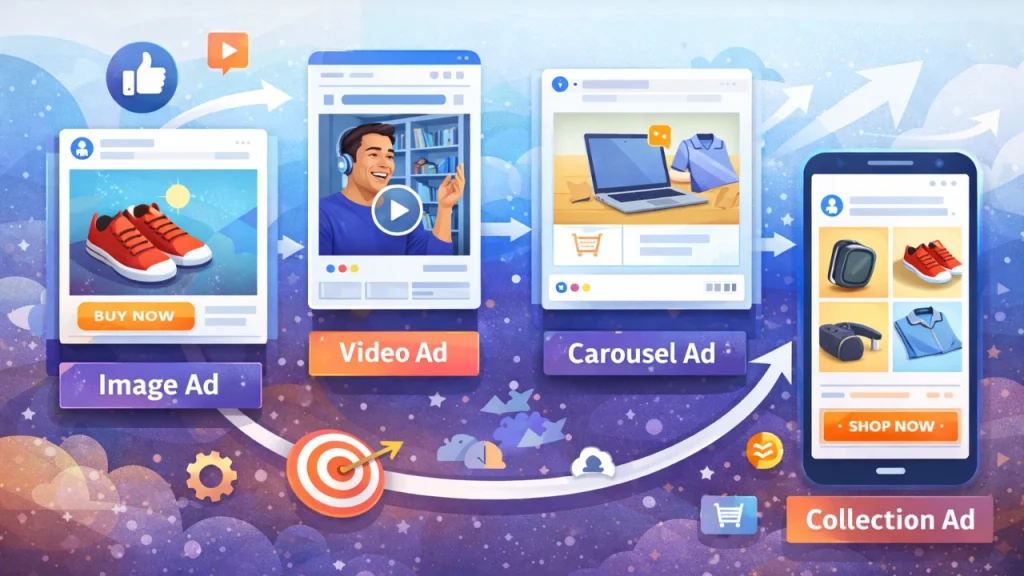
Facebook offers multiple ad formats to suit different marketing objectives, and choosing the right type plays a crucial role in campaign success.
Image ads are the most basic format and are highly effective for creating brand awareness. They are simple, quick to create, and work well when you want to deliver a clear message.
Video ads, on the other hand, are more engaging and allow businesses to communicate their story in a more dynamic way. These ads are ideal for product demonstrations, storytelling, and building emotional connections with the audience.
Slideshow ads provide a lightweight alternative to video ads by combining multiple images with text and sound. They are particularly useful for audiences with slower internet connections.
Carousel ads enable advertisers to showcase multiple images or videos within a single ad. This format is especially beneficial for eCommerce businesses that want to highlight multiple products or features.
Collection ads are designed to provide a seamless shopping experience by displaying a product catalog along with a main visual. These ads are highly effective for driving conversions.
Instant Experience ads offer a full-screen, immersive mobile experience that captures user attention instantly. They are optimized for mobile devices and deliver fast-loading interactive content.
About the Advertiser
While Facebook advertising is easy to start, achieving consistent results requires a clear understanding of how the platform works. One common mistake businesses make is expecting immediate sales. However, Facebook ads are more effective at creating demand rather than directly converting users.
Successful advertisers focus on building relationships with their audience. Instead of pushing users to buy immediately, they guide them through a journey that includes awareness, engagement, and eventually conversion. Actions such as signing up, clicking a link, or engaging with content are often more effective initial goals.
Businesses that adopt a long-term strategy and focus on customer lifetime value tend to see better results from their Facebook advertising efforts.
The Process of Advertising
Structure of Facebook Ad
Facebook advertising follows a structured approach that includes three levels: campaign, ad set, and ad. Each level plays a specific role in achieving the overall objective.
At the campaign level, advertisers define their goal, which could be awareness, traffic, or conversions. The ad set level focuses on audience targeting, budget, and schedule. Finally, the ad level includes the creative elements such as images, videos, and text that users interact with.
This structured approach ensures better organization and allows advertisers to optimize each part of the campaign effectively.
Objectives of Facebook Ads
Choosing the right objective is essential for the success of any campaign. Facebook provides different objectives based on the stage of the customer journey.
These objectives can be broadly categorized into:
- Awareness: Focused on increasing brand visibility
- Consideration: Encouraging users to learn more or engage
- Conversion: Driving specific actions such as purchases or sign-ups
Selecting the right objective ensures that your campaign aligns with your business goals and delivers meaningful results.
Campaign Name
Naming your campaign properly may seem like a small detail, but it plays a significant role in campaign management. A clear and structured naming convention helps in tracking performance and organizing multiple campaigns efficiently.
Including elements such as date, objective, and audience type in the campaign name makes it easier to identify and analyze campaigns later.
Choosing the right ad format is important for success. With our paid social media marketing services, we help businesses select and run the best-performing ad formats.
Audience and Targeting
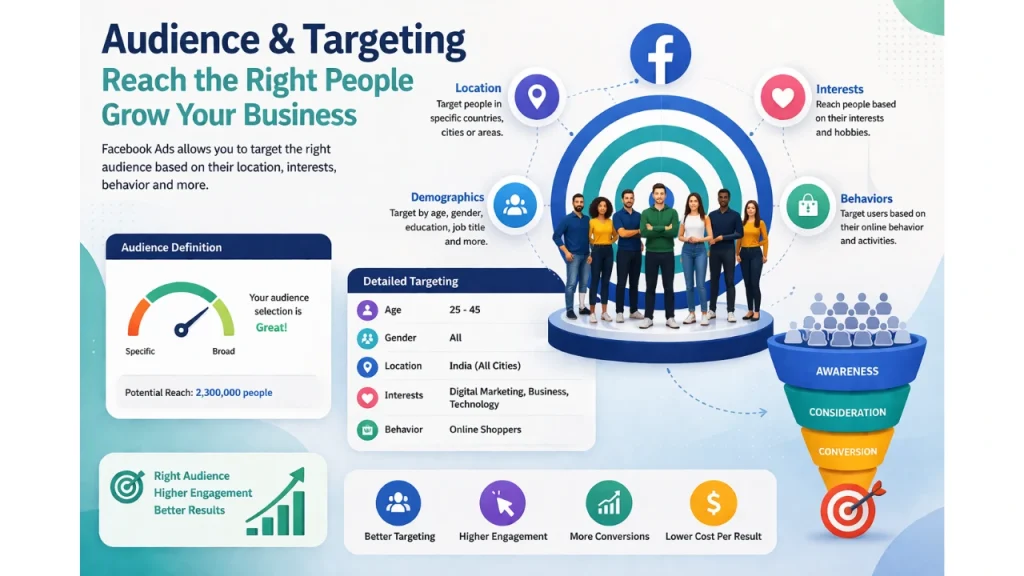
Audience targeting is one of the most powerful features of Facebook advertising. It allows businesses to reach users who are most likely to be interested in their products or services.
Facebook provides different types of audiences:
- Saved Audience: Based on demographics and interests
- Custom Audience: Retargeting users who have already interacted with your business
- Lookalike Audience: Reaching new users similar to your existing customers
In addition to this, advertisers can target users based on factors such as location, age, gender, behavior, and language. Behavior-based targeting is often more effective because it focuses on users who have already shown intent through their actions.
Setting up Placements
Placement determines where your ads will appear across Facebook’s network, including Facebook, Instagram, and Messenger. Choosing the right placement can impact the performance of your campaign significantly.
Facebook offers an automatic placement option, which uses its algorithm to show ads in the most effective locations. This is generally recommended for beginners, as it simplifies the process and maximizes results.
Budget and Bidding
Setting an appropriate budget is crucial for achieving your advertising goals. Facebook allows advertisers to choose between a daily budget and a lifetime budget, depending on their campaign strategy.
The platform operates on an auction system where multiple advertisers compete to show their ads. The outcome is determined by a combination of bid amount, ad quality, and expected performance. Beginners are advised to start with automatic bidding, which helps optimize results without requiring advanced knowledge.
Ad Scheduling
Ad scheduling allows advertisers to control when their ads are displayed. This feature is particularly useful for targeting users during specific times or days when they are most active.
By analyzing audience behavior and engagement patterns, businesses can schedule their ads more effectively and improve overall performance.
Create Your Ad
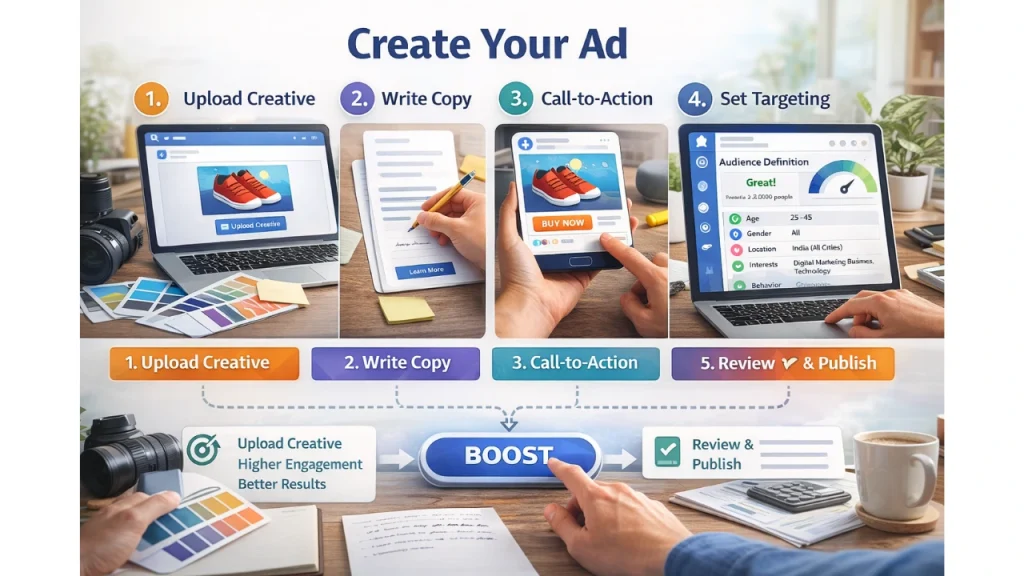
Creating a compelling ad is one of the most important aspects of a successful campaign. A well-designed ad captures attention, communicates value, and encourages users to take action.
To create effective ads, keep these points in mind:
- Use high-quality visuals that stand out
- Write clear and concise ad copy
- Include a strong call to action
Previewing the ad before publishing ensures that it looks good across all placements and devices.
Tracking and Measuring
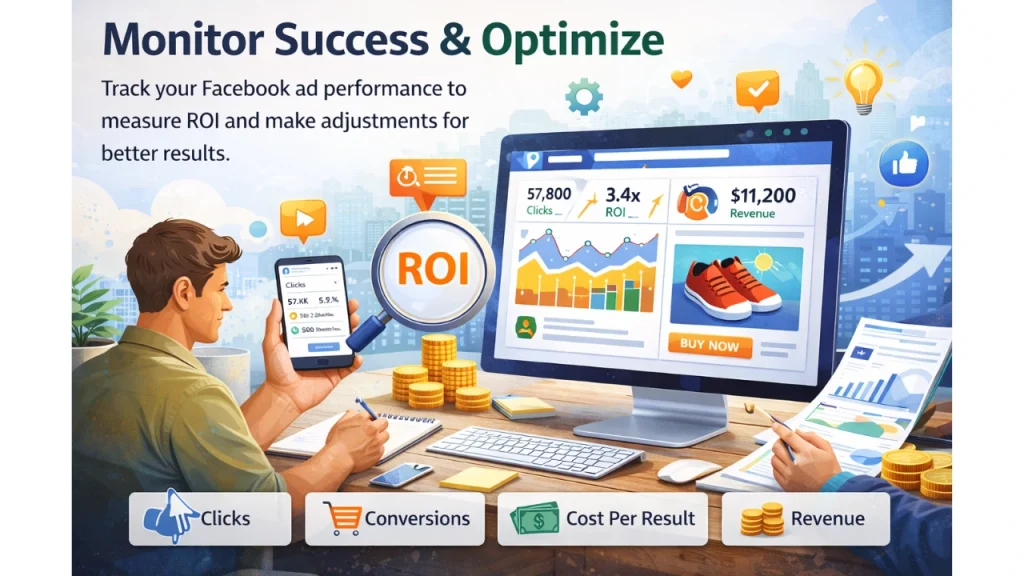
Tracking performance is essential for understanding how well your ads are performing. Facebook provides a range of metrics that help advertisers evaluate their campaigns.
Some of the most important metrics include:
- Clicks and impressions
- Click-through rate (CTR)
- Cost per click (CPC)
- Conversions and reach
Among these, CTR is particularly important because it indicates how engaging your ad is. A low CTR may suggest that your ad needs improvement in terms of creative or targeting.
FAQs
1. What are the basic requirements to start advertising on Facebook?
To start advertising on Facebook, you need a Facebook business account, an active Facebook page, and a valid payment method linked to your account. These elements allow you to create and manage ad campaigns using Ads Manager. Once everything is set up, you can start running ads and targeting your audience effectively.
2. How do I choose the right type of ad?
Choosing the right ad type depends on your campaign objective, such as brand awareness, traffic, or conversions. For example, video ads work well for engagement, while carousel ads are ideal for showcasing multiple products. Understanding your goal will help you select the most effective ad format for better results.
3. What is the best way to target audience on Facebook ads?
The best way to target your audience is by using a combination of demographics, interests, and behavior-based targeting. You can also use custom audiences to retarget previous visitors and lookalike audiences to reach similar users. This approach ensures that your ads are shown to people who are more likely to convert.
4. How can I optimize my Facebook ad budget for better results?
To optimize your ad budget, start with a small amount and test different audiences, creatives, and ad sets. Monitor performance metrics like CTR and conversions, and gradually increase spending on high-performing campaigns. This strategy helps in reducing waste and improving overall return on investment.
5. How do I measure the success of Facebook ads?
The success of Facebook ads can be measured using key metrics such as click-through rate (CTR), cost per click (CPC), conversions, and return on investment (ROI). These metrics help you understand how your ads are performing and where improvements are needed. Regular analysis ensures better campaign optimization.
6. Can I run Instagram ads using Facebook Ads Manager?
Yes, Facebook Ads Manager allows you to run ads on Instagram along with Facebook from a single dashboard. Since both platforms are connected, you can easily select placements and manage campaigns in one place. This integration helps maximize reach and improve campaign performance.
7. Why are my Facebook ads not performing well?
Facebook ads may not perform well due to poor targeting, weak ad creatives, or selecting the wrong campaign objective. Sometimes, low-quality visuals or unclear messaging can also affect results. Regular testing and optimization are necessary to identify and fix these issues.
8. What are the latest Facebook advertising trends in 2026?
In 2026, Facebook advertising is focusing more on AI-driven campaigns, short-form video content, and personalized ads. Businesses are also using automation tools to optimize performance and reduce manual effort. Staying updated with these trends can help you stay ahead of competitors.
9. How long should I run Facebook ads for best results?
It is recommended to run Facebook ads for at least 5 to 7 days during the testing phase to collect enough data. This allows the algorithm to optimize performance and deliver better results. After analyzing the data, you can scale or adjust your campaigns accordingly.
10. What is the most important metric in Facebook advertising?
Click-through rate (CTR) is one of the most important metrics because it shows how engaging your ad is. A higher CTR usually indicates that your audience finds your ad relevant and appealing. Improving CTR can also help reduce advertising costs and increase overall performance.
Call To Action
If you want to grow your business with high-performing Facebook ads, iBirds Digital can help you create and manage campaigns that deliver real results. Contact our team today and take your digital marketing strategy to the next level.